


Flossing vs Water Flosser: Which Is Better for Your Oral Health?

By Dr. Srishti Grover BDS, MDS (Conservative Dentistry & Endodontics) | FAGE | FPFA | Aesthetic Dentist | Certified Laser Dentist
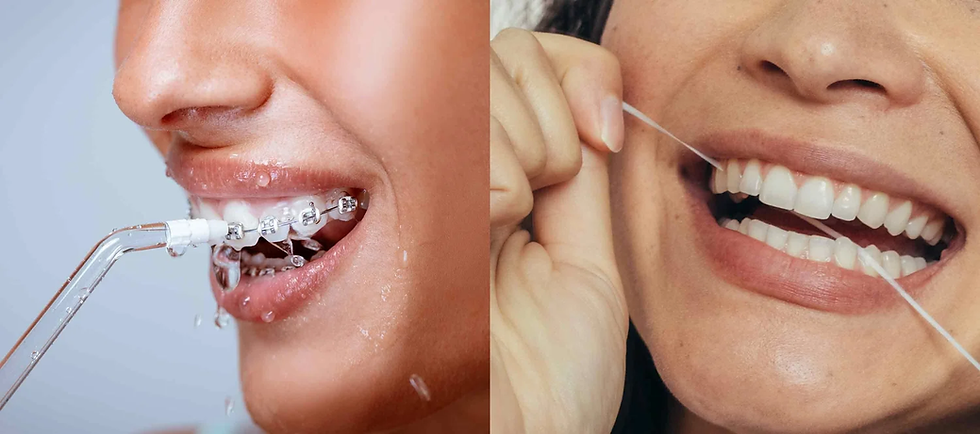
Maintaining good oral hygiene goes beyond brushing twice a day. Plaque and food particles often remain trapped between teeth, increasing the risk of cavities and gum disease. This is where interdental cleaning becomes essential.
But should you choose traditional dental floss or a water flosser?
Traditional Floss
Dental floss removes plaque by physically cleaning the sides of your teeth.
Best for:
Healthy teeth and gums
Tight spaces between teeth
Preventing cavities between teeth
Pros
Excellent plaque removal
Affordable and portable
No batteries or charging required
Cons
Technique-sensitive
Can be difficult with braces or implants
Water Flosser
A water flosser uses a pressurized stream of water to remove food debris and bacteria along the gumline.
Best for:
Braces
Dental implants and bridges
Sensitive or bleeding gums
Limited hand dexterity
Pros
Easy to use
Gentle on gums
Effective around orthodontic appliances and restorations
Cons
More expensive
Requires power and regular maintenance
May not remove sticky plaque as effectively as floss in tight contacts
Which One Should You Choose?
There isn't a one-size-fits-all answer.
Choose traditional floss if you have healthy gums and can floss correctly.
Choose a water flosser if you wear braces, have implants, or find flossing difficult.
For many patients, using both provides the most comprehensive cleaning.
Quick FAQs
Can a water flosser replace floss?
It can be an excellent alternative for some patients, but traditional floss remains highly effective for removing plaque between tightly contacting teeth.
Do water flossers help with bleeding gums?
Yes. Regular use can reduce inflammation and improve gum health when combined with good brushing habits.
Should I floss before or after brushing?
Either is fine, as long as you clean between your teeth once every day.


Comments