


Eye Health Essentials - What to Eat What to Avoid and Daily Habits That Protect Your Vision

Your eyes work every waking minute, yet eye health often gets attention only when vision becomes blurry, dry, strained, or painful. The good news is that many everyday habits can help protect vision, reduce discomfort, and support long-term eye function.
Good eye care is not limited to glasses or eye drops. It includes food choices, screen habits, sleep, sun protection, hygiene, and regular eye check-ups. This guide covers what to do, what to eat, and what to avoid for healthier eyes.

Build daily habits that protect your eyes
Small habits can make a noticeable difference, especially if you spend long hours reading, driving, studying, or using screens.
Follow the 20-20-20 rule when using digital devices. Every 20 minutes, look at something about 20 feet away for 20 seconds. This relaxes the focusing muscles and may reduce eye strain.
Blink more often while using a phone, laptop, or tablet. Screen use can reduce blinking, which leads to dryness, burning, and a gritty feeling. If the eyes feel dry often, preservative-free lubricating drops may help, but regular dryness should be checked by a doctor.
Protect your eyes from sunlight. Wear sunglasses that offer UV protection when outdoors, especially during strong afternoon sun. UV exposure can contribute to cataract formation and other eye problems over time.
Keep screens at a comfortable distance. A laptop or monitor should usually sit at arm’s length, with the top of the screen around eye level. Avoid using phones in complete darkness for long periods, as this can increase strain.
Get enough sleep. Tired eyes often feel heavy, dry, red, or sensitive to light. Rest supports tear production and gives the eye surface time to recover.
Do not ignore changes in vision. Sudden blurry vision, flashes of light, floating spots, eye pain, double vision, or sudden loss of vision needs urgent medical attention.
Eat foods that support healthy vision
No single food can “cure” weak eyesight, but a nutrient-rich diet supports the retina, lens, tear film, and blood vessels of the eye.
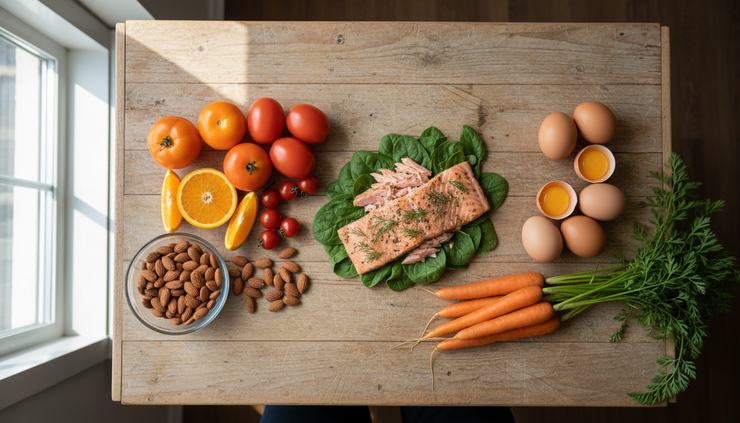
Include more leafy green vegetables such as spinach, methi, bathua, amaranth, and kale. These contain lutein and zeaxanthin, nutrients linked with retinal health.
Choose orange and yellow foods such as carrots, pumpkin, sweet potato, mango, and papaya. They provide beta-carotene, which the body uses to make vitamin A. Vitamin A helps maintain the eye surface and supports low-light vision.
Add vitamin C-rich foods such as amla, guava, oranges, lemons, capsicum, and tomatoes. Vitamin C supports blood vessels and helps protect tissues from oxidative stress.
Eat sources of omega-3 fats. Fatty fish, flaxseeds, chia seeds, walnuts, and soybeans may support tear quality and help with dry eye symptoms in some people.
Do not forget zinc and protein. Lentils, beans, curd, paneer, eggs, nuts, seeds, and whole grains support tissue repair and normal immune function.
A simple eye-friendly Indian plate could include:
Food group | Good choices |
Vegetables | Spinach, carrots, pumpkin, capsicum, tomatoes |
Fruits | Amla, guava, papaya, oranges, mango |
Protein | Dal, chana, eggs, fish, paneer, curd |
Healthy fats | Walnuts, flaxseeds, chia seeds, almonds |
Whole grains | Roti, brown rice, millets, oats |
Hydration also matters. Drinking enough water supports tear production and helps reduce dryness, especially in hot weather or air-conditioned rooms.
Avoid habits that harm your eyes
Some habits quietly increase the risk of eye irritation, infection, injury, or long-term damage.
Avoid rubbing your eyes. Rubbing can irritate the surface, worsen allergies, and increase the risk of infection. If the eyes itch often, the cause may be allergy, dryness, or infection, and it should be treated properly.
Do not use expired eye drops. Also avoid using someone else’s drops, even if symptoms look similar. Steroid eye drops, in particular, can be harmful if used without medical guidance.
Never sleep with contact lenses unless your eye doctor has specifically advised that your lenses are safe for overnight use. Sleeping in lenses increases the risk of serious infection.
Limit smoking and tobacco exposure. Smoking is linked with a higher risk of several eye conditions, including cataracts and retinal problems.
Do not stare at screens for long hours without breaks. Eye strain may not permanently damage the eyes in most cases, but it can cause headaches, dryness, blurred vision, and poor focus.
Avoid using kajal, eyeliner, or makeup inside the waterline if your eyes are sensitive or infection-prone. Remove eye makeup before sleeping and replace old products regularly.

Get regular eye check-ups at the right time
Regular eye exams help detect problems before they become serious. Many conditions, such as glaucoma, diabetic eye disease, and early cataracts, may not cause obvious symptoms at first.
Children should have their vision checked if they sit too close to screens, copy poorly from the board, complain of headaches, rub their eyes often, or show poor school performance.
Adults who use glasses or contact lenses should follow the review schedule advised by their eye doctor. People with diabetes, high blood pressure, a family history of glaucoma, previous eye surgery, or long-term steroid use may need more frequent checks.
If you are searching online for an Opthalmologist in south delhi, eye surgeon in south delhi, make sure to visit Netrayatan Hospital for proper diagnostic testing, clear counselling, and follow-up care.
Seek urgent help if you notice:
Sudden loss of vision
Severe eye pain
Flashes of light or many new floaters
Eye injury or chemical exposure
Redness with light sensitivity
Sudden double vision
Keep children’s eyes healthy from the start
Children may not always explain vision problems clearly. Parents and caregivers should watch for squinting, frequent blinking, watery eyes, poor attention while reading, or holding books very close.
Outdoor play is helpful for children’s overall health and may also support healthy visual development. Balance screen time with breaks, sleep, and physical activity.
Encourage children to read in good lighting, avoid screens too close to the face, and wear protective eyewear during sports when needed. A routine eye check before school age can catch refractive errors early.

The takeaway for better eye health
Healthy eyes need steady care, not complicated routines. Eat colourful fruits and vegetables, take screen breaks, wear UV-protective sunglasses, sleep well, avoid rubbing your eyes, and never self-medicate with eye drops.
Most of all, do not wait for vision to worsen before booking an eye check-up. Clear sight is easier to protect when problems are found early.


Comments